
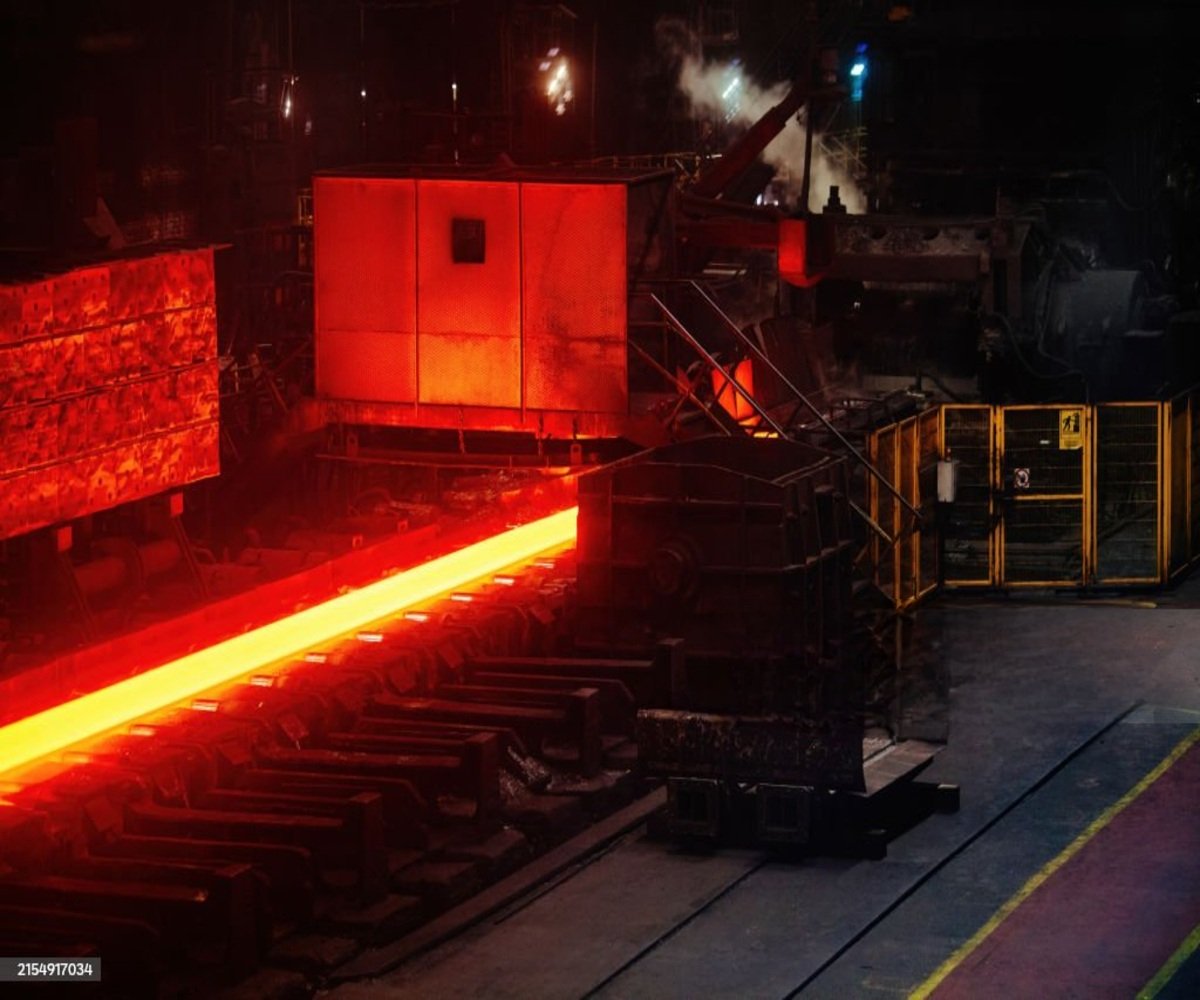
At *Dayalu Induction*, we specialize in high-performance induction heating systems for long bars, rods, and profiles. Our technology delivers uniform, controlled heating across extended lengths—ideal for forming, upsetting, forging, and heat treatment processes.
Induction long bar heating is a continuous or segmented heating process in which metal bars pass through an induction coil to achieve consistent surface and core temperatures. Unlike localized or batch heating methods, this approach ensures uniform thermal distribution along long workpieces—eliminating warping, hotspots, and dimensional distortion.
To uniformly heat long metal bars for forming, forging, or thermal conditioning without melting or damaging the material.
Before Heating: Solid
After Heating: Solid
The process precisely elevates temperature while maintaining the metal’s structural integrity.
Achieve consistent surface and core temperatures across the full length of the bar, preparing it for:
Mechanical deformation
Heat treatment
Downstream manufacturing processes
Induction long bar heating is commonly used for:
Hot forming and upsetting
Precision bending and shaping
Surface hardening or tempering
Dimensional calibration prior to machining
Inline forging or extrusion processes
Result: Uniformly heated bars with consistent metallurgical properties, ready for high-accuracy forming or heat treatment—without distortion, cracking, or uneven hardness.
Engineered coil designs ensure consistent temperature across the entire bar—critical for forming precision and forging accuracy.
Systems support inline heating, rotary indexing, or batch processing to match production requirements.
Designed for long production runs with fast cycle times and minimal downtime.
Microcontroller-based systems provide precise temperature regulation, real-time feedback, and seamless automation integration.
Controlled thermal gradients reduce internal stress and preserve dimensional integrity.